Introduction
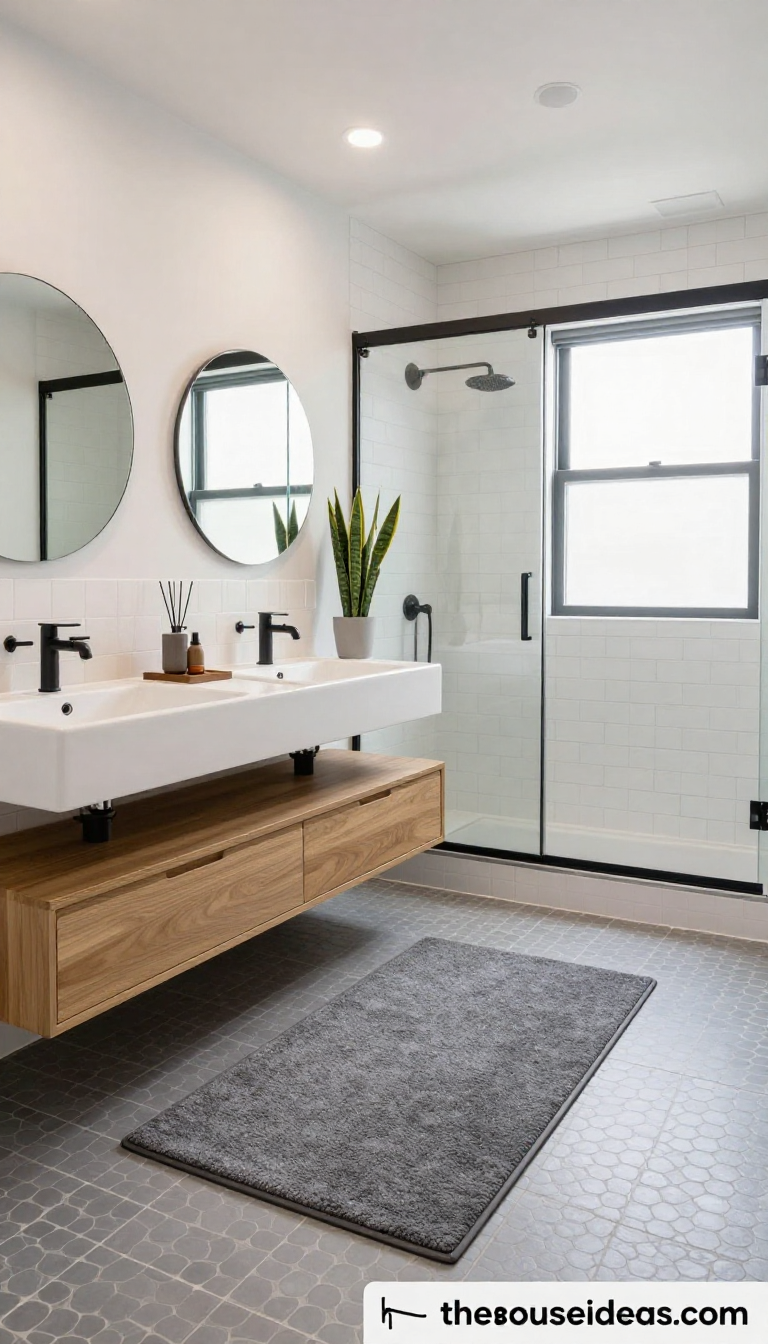
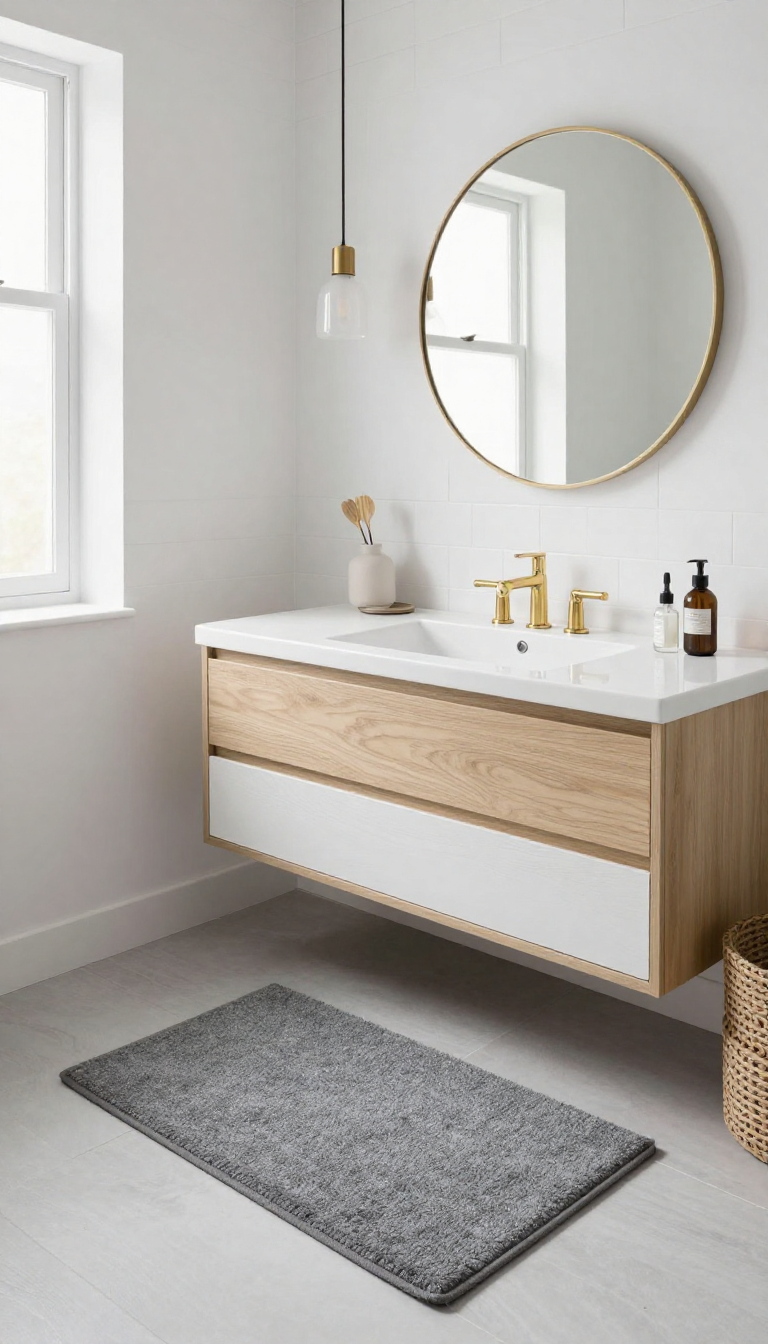
Creating a mid-century modern bathroom design with gray wool rug and oak floating vanity brings together timeless elegance and functional simplicity. This design approach combines the warmth of natural materials with the clean lines that defined the mid-century era. The cool gray wool bath mat provides a soft, textural contrast to the rich tones of white oak, creating a balanced and inviting space. When properly executed, this style transforms an ordinary bathroom into a sophisticated retreat that feels both contemporary and classic.
The mid-century modern bathroom design with gray wool rug and oak floating vanity has gained popularity for its ability to blend vintage charm with modern functionality. The floating vanity creates an illusion of more space while the wool rug adds comfort underfoot. This combination works particularly well in smaller bathrooms where maximizing visual space is crucial. The neutral color palette of cool gray and white oak provides a versatile foundation that can be easily updated with accessories and accent pieces over time.
What makes this design approach so appealing is its versatility across different home styles. Whether you’re working with a newly constructed home or updating a vintage property, the mid-century modern bathroom design with gray wool rug and oak floating vanity adapts beautifully to various architectural contexts. The natural materials age gracefully, developing character over time rather than showing wear. This investment in quality materials and thoughtful design ensures your bathroom remains stylish and functional for years to come.
Benefits of Mid-Century Modern Bathroom Design
The mid-century modern bathroom design with gray wool rug and oak floating vanity offers numerous practical and aesthetic benefits that make it a worthwhile investment. The floating vanity design creates visual openness by exposing more floor space, making even compact bathrooms feel larger and more airy. This design element also simplifies cleaning underneath the vanity, eliminating dust-collecting corners that are common with traditional floor-mounted vanities. The elevated position of the vanity adds a sculptural quality to the space while maintaining functionality.
Natural materials play a crucial role in the success of this design approach. White oak provides warmth and character that synthetic materials cannot replicate, while the cool gray wool rug adds softness and acoustic benefits. Wool naturally resists moisture and maintains its shape over time, making it an ideal choice for bathroom environments. The combination of these materials creates a sensory experience that engages both sight and touch, elevating the everyday bathroom routine into something more luxurious and intentional.
The timeless appeal of mid-century modern design ensures your bathroom won’t feel dated as trends change. Unlike more trendy approaches that may require frequent updates, the clean lines and natural materials of this style have proven their staying power for decades. The neutral color palette of cool gray and white oak provides flexibility for future updates through accessories, artwork, and textiles. This adaptability means you can refresh your space without major renovations, making it both a practical and economical design choice.
Color Palette Guide
The foundation of any successful mid-century modern bathroom design with gray wool rug and oak floating vanity begins with selecting the right color palette. For the walls, consider Benjamin Moore’s “Gray Owl” (OC-52) for a soft, warm gray that complements both the cool gray rug and white oak vanity. This versatile shade works beautifully in bathrooms with both natural and artificial lighting. For trim and ceiling, “Chantilly Lace” (OC-65) provides a crisp, clean white that enhances the mid-century aesthetic without feeling stark or clinical.
Accent colors can be introduced through carefully selected accessories and fixtures. Consider incorporating matte black hardware for faucets, drawer pulls, and light fixtures to create contrast against the lighter tones. For a pop of color that remains true to mid-century sensibilities, “Tequila Lime” (2028-30) by Benjamin Moore makes an excellent choice for a small accent wall or vanity interior. This vibrant green hue was popular in the 1950s and 1960s and pairs beautifully with both gray and oak tones.
The cool gray wool rug should be selected in a shade that bridges the wall color and the oak vanity. Look for rugs in the “Silver Chain” (1472) to “Stonington Gray” (HC-170) range to create a cohesive look. The natural variations in wool texture will add depth to the space, while the cool undertones maintain the modern feel. Consider layering a smaller patterned rug over a larger solid gray base for added visual interest and to protect high-traffic areas around the vanity and shower.
Essential Design Elements
The floating vanity serves as the centerpiece of any mid-century modern bathroom design with gray wool rug and oak floating vanity. When selecting your vanity, look for clean lines with minimal hardware or integrated drawer pulls that maintain the streamlined aesthetic. The white oak should be properly sealed with a water-resistant finish to protect against bathroom humidity. Consider a vanity with a vessel sink or integrated countertop in white quartz or solid surface material to maintain the light, airy feel of the space.
Lighting plays a crucial role in achieving authentic mid-century modern style. Wall sconces with brass or matte black finishes positioned at eye level on either side of the mirror provide even, flattering light for grooming tasks. For overhead lighting, consider a statement pendant or semi-flush mount fixture with geometric shapes or globe elements that were characteristic of the era. The George Nelson Bubble Lamp or similar designs would work beautifully in this setting, casting a warm glow that enhances the natural materials.
Storage solutions should be both functional and aesthetically pleasing in a mid-century modern bathroom design with gray wool rug and oak floating vanity. Open shelving in matching white oak provides display space for neatly folded towels and attractive toiletries while maintaining the visual lightness of the design. Consider incorporating a recessed medicine cabinet with a mirrored front to maximize storage without compromising the clean lines of the space. The key is to keep surfaces clutter-free, allowing the beauty of the materials and design to shine through.
Step-by-Step Implementation Guide
- Planning and Measurements: Begin by measuring your bathroom space carefully, noting the location of plumbing lines, electrical outlets, and windows. Create a scaled floor plan to determine the optimal size for your floating vanity. Standard vanity heights range from 30 to 36 inches, with 32 inches being comfortable for most adults. Allow at least 30 inches of clearance in front of the vanity for comfortable movement.
- Selecting the Vanity: Choose a floating vanity that complements your space and storage needs. For a 5×8 foot bathroom, a 24 to 30-inch vanity provides adequate counter space without overwhelming the room. Look for models with soft-close drawers and water-resistant construction. The IKEA Godmorgon series offers budget-friendly options that can be customized with white oak fronts from companies like Semihandmade.
- Wall Preparation: Since floating vanities require secure mounting to wall studs, reinforce the wall structure during the planning phase. Install a horizontal support board between studs where the vanity will mount, ensuring it can support at least 200 pounds. Apply moisture-resistant drywall and paint with your selected color palette before installing fixtures.
- Plumbing Modifications: Work with a licensed plumber to adjust water supply lines and drain pipes to accommodate the floating vanity height. This typically involves raising the rough-in plumbing 4 to 6 inches from standard floor-mounted vanity heights. Consider installing shut-off valves within the vanity for easy maintenance access.
- Lighting Installation: Install electrical wiring for wall sconces and overhead fixtures before finishing the walls. Position sconces 60 to 66 inches from the floor and 36 to 40 inches apart for optimal task lighting. Use dimmable LED bulbs in the 2700K to 3000K range to create a warm, inviting atmosphere that complements the natural materials.
- Finishing Touches: Install the floating vanity according to manufacturer specifications, ensuring it’s perfectly level. Add the white oak countertop or integrated sink, followed by the mirror and lighting fixtures. Place the cool gray wool rug in position, ensuring it doesn’t extend too close to wet areas. Complete the look with carefully selected accessories like a teak shower bench, ceramic soap dispenser, and framed mid-century artwork.
Shopping Guide by Budget
For those working with a limited budget, creating a mid-century modern bathroom design with gray wool rug and oak floating vanity is still achievable with strategic choices. Start with the IKEA Godmorgon vanity base paired with Semihandmade’s white oak fronts, which together cost approximately $500-800. For the cool gray wool rug, look to retailers like Ruggable or Wayfair for machine-washable options starting around $100-150. Complete the look with budget-friendly matte black fixtures from Amazon or Overstock, and consider painting existing walls with Benjamin Moore’s “Gray Owl” for around $50-70 per gallon.
The mid-range approach allows for higher quality materials and custom elements while maintaining reasonable costs. Consider a custom-sized floating vanity from a local cabinet maker using rift-sawn white oak, which typically costs $1,500-3,000 depending on size and features. For the cool gray wool rug, explore options from West Elm or Crate & Barrel in the $300-600 range for better quality and durability. Upgrade to designer fixtures from brands like Delta or Moen in the $300-500 range, and invest in professional installation to ensure proper mounting of the floating vanity.
For a luxury interpretation of the mid-century modern bathroom design with gray wool rug and oak floating vanity, the sky’s the limit in terms of customization and premium materials. Commission a bespoke floating vanity from a high-end millworker using premium white oak with book-matched grain patterns, which can cost $5,000-10,000 or more. Source a hand-knotted cool gray wool rug from a specialty rug dealer like ABC Carpet & Home, with prices starting around $2,000 for a quality piece. Incorporate designer fixtures from brands like Waterworks or Kohler, with faucets alone costing $1,000-2,000. Complete the luxury experience with heated flooring, a smart mirror with integrated lighting, and custom millwork for additional storage.
Common Mistakes to Avoid
One of the most frequent errors when implementing a mid-century modern bathroom design with gray wool rug and oak floating vanity is selecting a vanity that’s either too large or too small for the space. A vanity that overwhelms the room creates a cramped feeling, while one that’s too small fails to provide adequate storage and counter space. Always measure carefully and consider the 60-30-10 rule: 60% of the wall space should be open, 30% occupied by the vanity and mirror, and 10% by other elements like shelving or artwork.
Another common mistake is neglecting proper waterproofing and moisture protection, especially with natural materials like white oak. The wood must be sealed with multiple coats of marine-grade polyurethane or a similar water-resistant finish. Failure to do so can result in warping, staining, and deterioration over time. Additionally, the cool gray wool rug should be placed strategically to avoid direct contact with water sources, and a non-slip pad should be used underneath to prevent shifting and potential slipping hazards.
Lighting is often underestimated in bathroom design, leading to inadequate illumination for daily tasks. Many homeowners rely solely on overhead lighting, which can create unflattering shadows. In a mid-century modern bathroom design with gray wool rug and oak floating vanity, it’s essential to layer lighting sources. Install sconces at eye level on either side of the mirror for task lighting, add ambient overhead lighting, and consider LED strip lighting under the floating vanity for a subtle nightlight effect. This multi-layered approach ensures the space is both functional and atmospheric.
Frequently Asked Questions
What size floating vanity works best for a small bathroom?
For small bathrooms under 40 square feet, a floating vanity between 18 and 24 inches wide typically works best. This size provides adequate counter space for daily essentials while maintaining clear floor space to enhance the feeling of openness. Consider a wall-mounted faucet to maximize counter space, and choose a vanity with a single drawer or door for essential storage without visual bulk.
How do I maintain a wool rug in a bathroom environment?
Maintaining a cool gray wool rug in a bathroom requires regular care to prevent moisture damage and mildew. Vacuum weekly with a suction-only attachment to remove dust and debris. Blot spills immediately with a clean, white cloth rather than rubbing. Ensure proper ventilation in the bathroom to reduce humidity, and consider removing the rug periodically to air out and vacuum the floor underneath. For deep cleaning, professional wool rug cleaning every 12-18 months is recommended.
Can I install a floating vanity myself, or should I hire a professional?
While experienced DIYers can install a floating vanity, hiring a professional is recommended for most homeowners. Proper installation requires precise leveling, secure mounting to wall studs or blocking, and often plumbing modifications. A professional can ensure the vanity is safely mounted to support the weight of the countertop, sink, and contents, while also making any necessary adjustments to plumbing connections.
What alternatives work if white oak is outside my budget?
If white oak exceeds your budget, several alternatives can achieve a similar mid-century modern look. Consider white oak veneer over a less expensive wood substrate, which provides the aesthetic at a lower cost. Other light-toned woods like maple or ash can work well when finished appropriately. For a non-wood option, high-quality laminate or thermofoil in a light oak or walnut finish can mimic the look while offering better moisture resistance and lower cost.
How do I incorporate storage in a floating vanity design?
Maximizing storage in a floating vanity requires thoughtful design. Look for models with deep drawers that utilize full-extension slides to access the entire depth. Internal drawer organizers can help keep items tidy and maximize space efficiency. Consider a U-shaped drawer that accommodates plumbing while providing storage on either side. For additional storage, incorporate wall-mounted cabinets or open shelving in matching finishes to complement the floating vanity.
Conclusion
Creating a mid-century modern bathroom design with gray wool rug and oak floating vanity offers a perfect blend of timeless style and practical functionality. This design approach celebrates the beauty of natural materials while embracing the clean, uncluttered aesthetic that defines mid-century modern design. The combination of cool gray and white oak creates a serene, sophisticated atmosphere that transforms the bathroom from a purely utilitarian space into a personal retreat.
The versatility of this design makes it suitable for various bathroom sizes and styles, from compact powder rooms to spacious master baths. By carefully selecting quality materials and paying attention to details like proper lighting and waterproofing, you can create a space that not only looks beautiful but also stands up to the demands of daily use. The investment in natural materials like wool and oak pays dividends in durability and timeless appeal, ensuring your bathroom remains stylish for years to come.
Whether you’re undertaking a complete renovation or making selective updates, the principles of mid-century modern design can guide you toward creating a bathroom that feels both current and classic. Remember that successful design is about more than following trends—it’s about creating a space that enhances your daily routine and brings you joy every time you enter. With careful planning and attention to the elements we’ve discussed, you can achieve a stunning mid-century modern bathroom design with gray wool rug and oak floating vanity that perfectly balances form and function.