Introduction
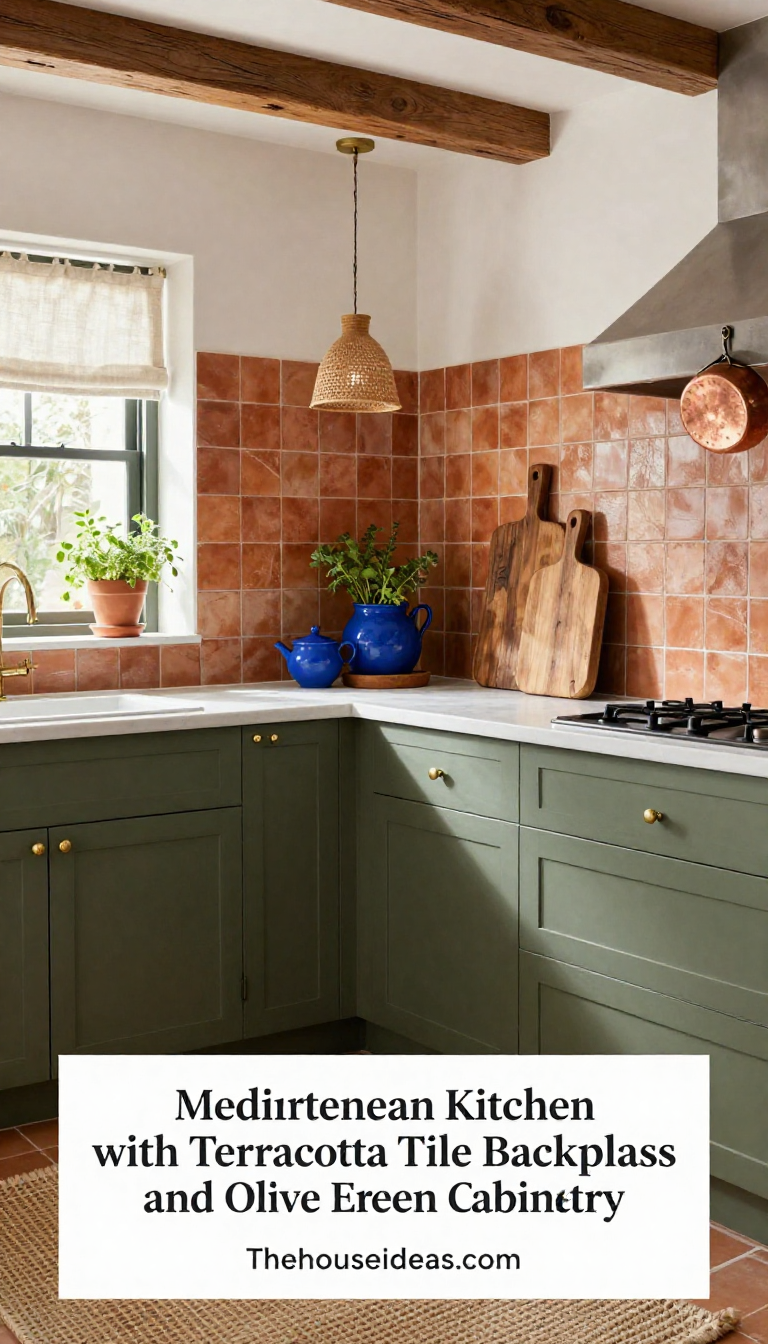
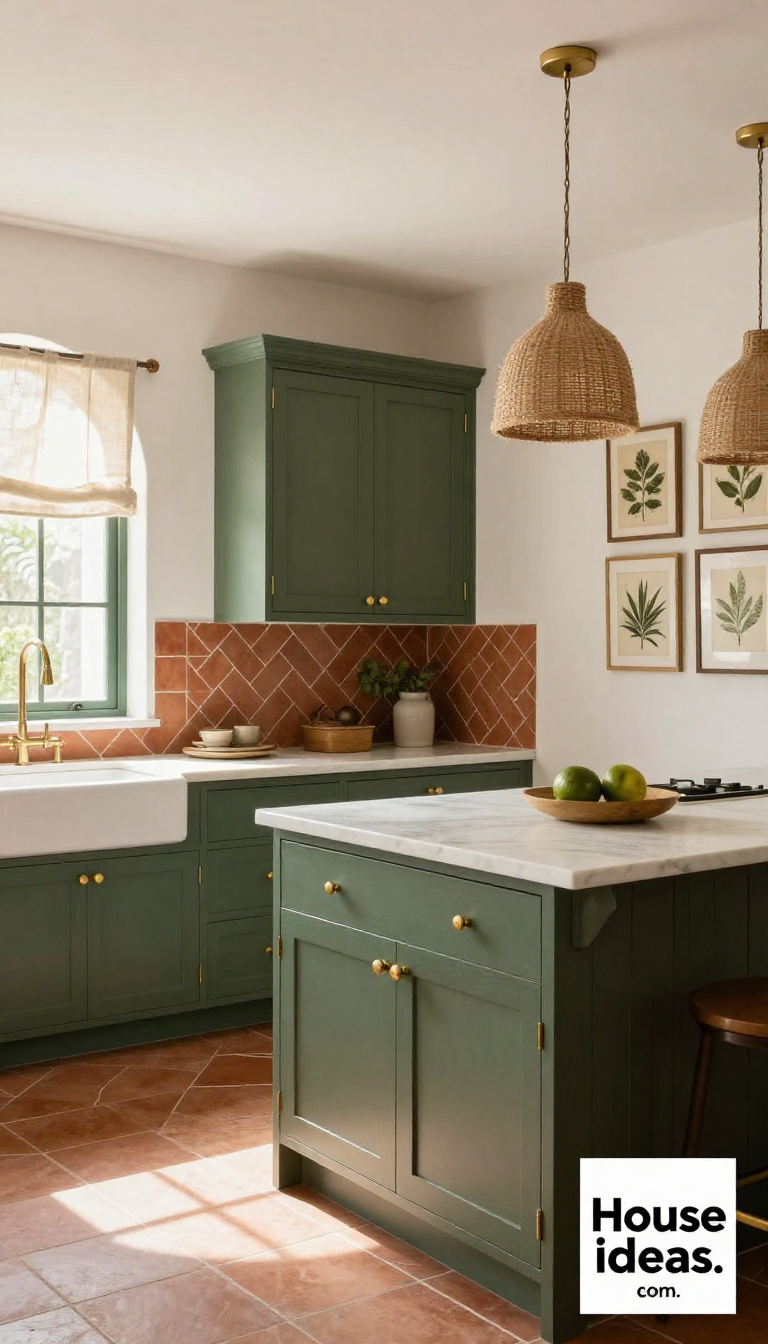
The terracotta and olive green Mediterranean kitchen design with jute accents creates a warm, inviting space that captures the essence of coastal European charm. This timeless style combines earthy terracotta tiles with rich olive green cabinetry to create a kitchen that feels both rustic and sophisticated. The addition of natural jute accents adds texture and warmth, making this design perfect for homeowners who want a space that’s both beautiful and functional. Whether you’re renovating your entire kitchen or just looking to refresh your space, this Mediterranean-inspired design offers endless possibilities for creating a kitchen that feels like a permanent vacation.
Mediterranean kitchen design has gained popularity in recent years for its ability to blend traditional elements with modern functionality. The terracotta and olive green color palette draws inspiration from the sun-drenched landscapes of Southern Europe, creating a space that feels connected to nature. Jute accents, whether in the form of rugs, window treatments, or decorative elements, add an organic touch that softens the overall look. This design style works particularly well in homes with open floor plans, as it creates a seamless flow between the kitchen and adjacent living spaces.
What makes this design truly special is its versatility. The terracotta tile backsplash provides a durable and easy-to-clean surface that can withstand the demands of daily cooking. Olive green cabinetry offers a sophisticated alternative to traditional white or wood finishes, while still maintaining a warm and welcoming atmosphere. The jute accents tie everything together, creating a cohesive look that feels both intentional and effortless. Whether you’re a seasoned chef or someone who simply enjoys gathering with friends and family, this Mediterranean kitchen design creates the perfect backdrop for making memories.
Benefits of Terracotta and Olive Green Mediterranean Design
One of the primary benefits of this Mediterranean kitchen design is its timeless appeal. Unlike trendy color schemes that quickly become dated, the combination of terracotta and olive green has been used in Mediterranean homes for centuries. This means your kitchen will maintain its beauty and relevance for years to come, making it a smart investment for your home. The natural materials used in this design, such as terracotta tiles and jute accents, are also incredibly durable and easy to maintain, ensuring your kitchen looks beautiful with minimal effort.
Another significant advantage of this design style is its ability to create a warm and inviting atmosphere. The rich, earthy tones of terracotta and olive green evoke feelings of comfort and relaxation, making your kitchen a space where people naturally want to gather. This is particularly beneficial for families who spend a lot of time in the kitchen or for those who love to entertain. The addition of jute accents adds another layer of warmth and texture, creating a space that feels cozy without feeling cluttered or overwhelming.
From a practical standpoint, this Mediterranean kitchen design offers excellent functionality. Terracotta tiles are naturally resistant to heat and stains, making them an ideal choice for a backsplash. Olive green cabinetry can help hide fingerprints and smudges better than lighter colors, reducing the need for constant cleaning. The natural materials used throughout the design are also environmentally friendly, making this a great choice for homeowners who are conscious about their environmental impact. Additionally, the timeless nature of this design means it can easily adapt to changing trends and personal preferences over time.
Color Palette Guide
When creating a terracotta and olive green Mediterranean kitchen, it’s important to choose the right shades to achieve the desired look. For the terracotta tile backsplash, consider using tiles in shades like Rustique by Fireclay Tile or Terra Cotta by Ann Sacks. These tiles capture the warm, earthy tones of traditional Mediterranean design while offering modern durability and ease of maintenance. For the olive green cabinetry, Benjamin Moore’s “Tarrytown Green” or Farrow & Ball’s “Bancha” are excellent choices that provide depth and richness without feeling too dark or overwhelming.
To complement the terracotta and olive green, incorporate neutral tones throughout the space. Warm whites like Benjamin Moore’s “White Dove” or Sherwin-Williams’ “Alabaster” work beautifully for walls and trim, creating a bright backdrop that allows the terracotta and olive green to shine. For the jute accents, look for natural, undyed jute in various textures and weaves. Consider using a chunky jute rug under the dining table or jute window treatments to add softness and warmth to the space. These neutral elements help balance the rich colors and prevent the kitchen from feeling too heavy or dark.
Don’t forget to add accent colors that enhance the Mediterranean feel. Deep blues like navy or cobalt can be incorporated through accessories like pottery, textiles, or even a statement light fixture. Warm metallics like brass or copper also work beautifully in this design scheme, adding a touch of luxury and sophistication. Consider using brass hardware on your olive green cabinets or incorporating copper pots and pans as both functional and decorative elements. These accent colors help create a layered, collected look that feels authentic to Mediterranean design.
Design Elements and Layout
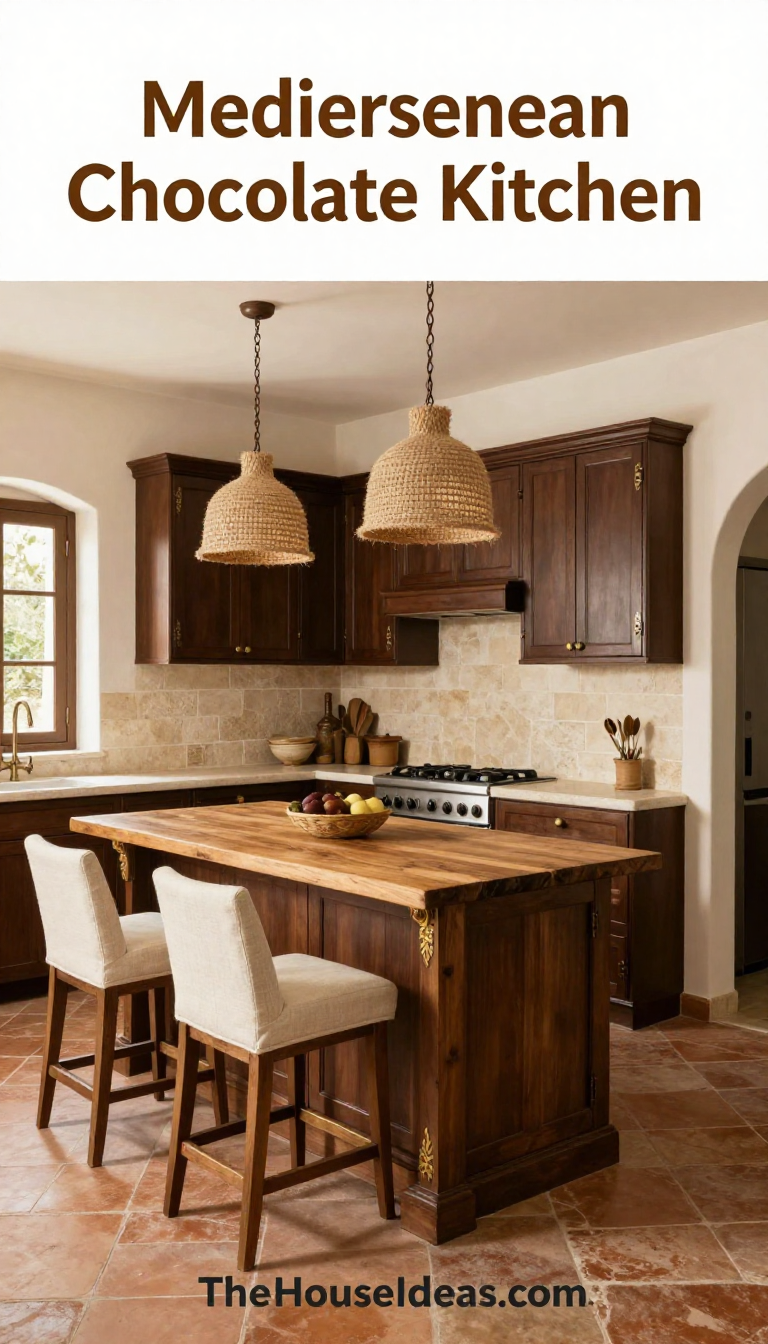
The furniture and layout in a Mediterranean kitchen should prioritize both functionality and aesthetics. For the island, consider a large, farmhouse-style piece with a butcher block top, such as those offered by Pottery Barn or Restoration Hardware. This provides ample workspace for food preparation while adding a rustic touch to the space. Pair this with comfortable bar stools upholstered in natural linen or leather for a casual dining area. Open shelving made from reclaimed wood can display beautiful ceramics and glassware, adding to the collected, lived-in feel of the space.
Lighting is crucial in Mediterranean kitchen design, as it helps create the warm, inviting atmosphere that defines this style. Consider installing wrought iron pendant lights over the island, such as those from Visual Comfort or Currey & Company. These fixtures add a touch of traditional Mediterranean charm while providing ample task lighting. For ambient lighting, wall sconces with fabric shades can create a soft, diffused glow that enhances the cozy atmosphere. Don’t forget under-cabinet lighting to illuminate the terracotta backsplash and make food preparation easier.
The layout of your Mediterranean kitchen should encourage flow and interaction. An open-concept design works particularly well with this style, allowing the kitchen to seamlessly connect with adjacent living and dining areas. If space allows, consider incorporating a large dining table near the kitchen, perhaps with a rustic wooden table from Arhaus surrounded by comfortable, upholstered chairs. This creates a natural gathering spot for family meals and casual entertaining. The overall layout should feel organic and uncontrived, with plenty of space for movement and interaction.
Step-by-Step Guide to Creating Your Mediterranean Kitchen
- Plan Your Layout: Start by assessing your current kitchen layout and determining what changes are needed. Consider factors like workflow, storage needs, and how the kitchen connects to other living spaces. Create a detailed floor plan that includes the placement of major appliances, the island, and any additional seating areas.
- Select Your Materials: Choose your terracotta tiles for the backsplash, olive green paint or cabinetry, and jute accents. Order samples of each material to see how they look in your space and under different lighting conditions. This step may take several weeks, so plan accordingly.
- Prepare the Space: Remove existing cabinetry, countertops, and backsplash. Repair any wall damage and ensure the space is clean and ready for new installations. This may involve electrical and plumbing work, so consider hiring professionals for these tasks.
- Install Cabinetry: Begin with the olive green cabinetry, ensuring proper alignment and level installation. If you’re painting existing cabinets, allow adequate drying time between coats. Consider adding decorative elements like crown molding or corbels for an authentic Mediterranean look.
- Add the Backsplash: Install your terracotta tile backsplash, paying attention to pattern and grout color. A herringbone or subway pattern can add visual interest, while a contrasting grout color can highlight the tile design. Seal the tiles according to manufacturer instructions.
- Install Countertops and Hardware: Choose countertops that complement your color scheme, such as quartz with warm undertones or butcher block for a more rustic look. Add brass or copper hardware to the olive green cabinets for a cohesive Mediterranean feel.
- Incorporate Lighting and Accessories: Install your chosen lighting fixtures, including pendant lights, sconces, and under-cabinet lighting. Add jute rugs, window treatments, and decorative accessories like pottery, woven baskets, and copper cookware to complete the look.
Shopping Guide: Budget to Luxury Options
For those working with a budget, IKEA offers affordable olive green cabinetry options like the BODBYN line, which can be paired with terracotta tiles from home improvement stores like Home Depot or Lowe’s. Jute accents can be found at discount retailers like Target or HomeGoods, where you can find rugs, baskets, and other decorative items at reasonable prices. Consider DIY options for some elements, such as painting existing cabinets or creating your own open shelving from reclaimed wood.
Mid-range options provide a balance between quality and affordability. Semi-custom cabinetry from companies like KraftMaid or Waypoint offers more color and style options than stock cabinets while remaining budget-friendly. For the terracotta backsplash, consider handmade tiles from companies like Clé Tile or Fireclay Tile, which offer unique designs at moderate prices. West Elm and Pottery Barn offer beautiful jute and linen textiles that elevate the space without breaking the bank.
For a luxury Mediterranean kitchen, custom cabinetry from high-end manufacturers like Plain English or Christopher Peacock provides unparalleled quality and design flexibility. Handmade terracotta tiles from artisanal producers in Italy or Spain add authenticity and uniqueness to the space. Consider statement lighting fixtures from designers like Visual Comfort or Remains Lighting, and incorporate high-end appliances from brands like La Cornue or AGA. Luxury doesn’t stop at the basics – think about adding custom range hoods, integrated wine storage, and professional-grade cooking equipment to create a truly exceptional space.
Common Mistakes to Avoid
One of the most common mistakes in Mediterranean kitchen design is using the wrong shade of terracotta or olive green. Terracotta that’s too orange can feel dated, while olive green that’s too yellow can appear sickly. Always test paint and tile samples in your space before committing, as colors can look very different under various lighting conditions. Consider consulting with a color expert or interior designer to ensure you’re choosing the right shades for your specific space and lighting.
Another mistake is neglecting the importance of balance in the design. While terracotta and olive green are beautiful colors, using them too heavily can make the space feel overwhelming or cave-like. Ensure you incorporate plenty of light, neutral elements to balance the rich colors. This might mean choosing lighter countertops, incorporating white or cream walls, or using plenty of natural light through windows or skylights. The goal is to create a warm, inviting space, not a dark, heavy one.
Many homeowners also make the mistake of choosing trendy materials or finishes that don’t align with authentic Mediterranean design. While it’s fine to incorporate modern conveniences, try to maintain the integrity of the style by choosing materials and finishes that feel true to Mediterranean aesthetics. This means avoiding ultra-modern, minimalist hardware in favor of more traditional options, and choosing natural materials over synthetic ones whenever possible. Remember, Mediterranean design is about creating a timeless, collected look that feels authentic and lived-in.
Frequently Asked Questions
What type of flooring works best with a Mediterranean kitchen?
Natural stone flooring like travertine, limestone, or terracotta tiles works beautifully in Mediterranean kitchens. These materials provide durability and authenticity while complementing the terracotta and olive green color scheme. For a more budget-friendly option, consider porcelain tiles that mimic the look of natural stone. Wide-plank wood flooring in warm tones can also work well, especially if you want to create a more rustic Mediterranean feel.
How can I incorporate modern appliances without disrupting the Mediterranean aesthetic?
Choose appliances with panel-ready fronts that can be covered with cabinetry panels matching your olive green cabinets. This creates a seamless look that maintains the traditional aesthetic. For stainless steel appliances, consider integrated models that sit flush with the cabinetry. You can also use appliance garages or custom cabinetry to conceal smaller appliances when not in use, keeping the focus on the beautiful design elements.
Is this design style suitable for small kitchens?
Absolutely! Mediterranean design can work beautifully in small kitchens by using lighter shades of olive green and terracotta to prevent the space from feeling too dark. Consider using the terracotta as an accent wall or backsplash rather than covering all walls. Glass-front cabinets can make the space feel larger, and plenty of lighting – both natural and artificial – will keep the kitchen feeling bright and open.
How do I maintain terracotta tile backsplash?
Terracotta tiles should be sealed before installation and resealed annually to prevent staining. Clean them regularly with a pH-neutral cleaner and avoid harsh chemicals that can damage the sealant. Wipe up spills immediately, especially those from acidic substances like wine or citrus. With proper care, a terracotta backsplash can last for decades while maintaining its beautiful appearance.
Can I mix different patterns in a Mediterranean kitchen?
Yes, mixing patterns is actually encouraged in Mediterranean design! The key is to vary the scale of patterns and stick to a cohesive color palette. For example, you might pair a large-scale terracotta tile backsplash with smaller-scale patterns in textiles like window treatments or rugs. Just ensure that the patterns complement rather than compete with each other, and use solid colors to provide visual rest between patterned elements.
Conclusion
Creating a Mediterranean kitchen with terracotta tile backsplash and olive green cabinetry is an investment in both beauty and functionality. This timeless design style offers a perfect blend of rustic charm and modern convenience, creating a space that feels both welcoming and sophisticated. By incorporating natural materials like jute and following the design principles outlined in this guide, you can create a kitchen that not only looks beautiful but also enhances your daily life. Whether you’re cooking family meals, entertaining guests, or simply enjoying a quiet morning coffee, this Mediterranean-inspired kitchen will become the heart of your home.
Remember that the key to successful Mediterranean kitchen design lies in the details. From selecting the perfect shade of olive green to choosing authentic terracotta tiles and incorporating meaningful jute accents, each element contributes to the overall aesthetic. Don’t be afraid to take your time with the design process, gathering inspiration and making thoughtful choices that reflect your personal style while honoring the Mediterranean tradition. The result will be a kitchen that feels both timeless and uniquely yours.
Ready to transform your kitchen into a Mediterranean oasis? Start by gathering inspiration from design magazines like Architectural Digest and Elle Decor, then begin planning your dream kitchen. Whether you’re working with a modest budget or have the means for a luxury renovation, the principles of Mediterranean design can be adapted to suit any space and budget. Your perfect terracotta and olive green Mediterranean kitchen awaits – all it takes is the first step toward making your design dreams a reality.